CoachMatcher

Hoppla, etwas ist schiefgelaufen. Bitte prüfe deine Netzwerkverbindung und erneut versuchen.

Leadership is Co-Creation: Modern Leadership Needs Attitude, Not Hierarchy

Leadership is changing. Old hierarchies slow things down where creativity, ownership and collaboration are needed today. Modern leadership means creating space instead of setting rules, empowering instead of directing. Why co-creation is the key to future-ready organizations – and what that means for you as a leader.


✍️ Cinzia | 📅 27.11.2025 | 🕗 3 min

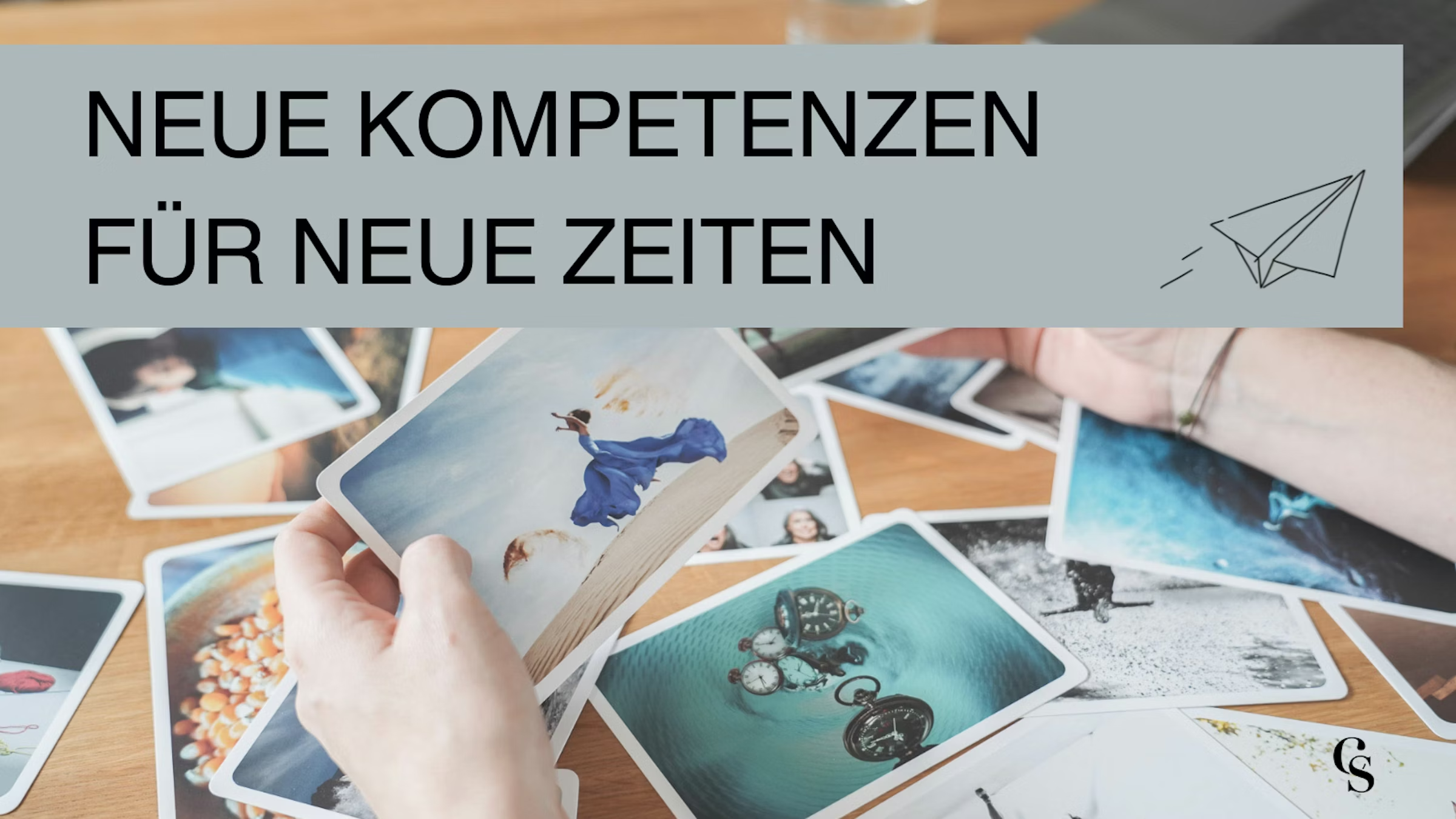
Picture cards on a table, two hands holding one of them: it shows a woman in a blue dress doing a jump in the air above a sand dune. Association: movement, dynamism, energy, sun, blue sky, strength.

1. Leadership is Co-Creation

Creativity, initiative and innovative strength are the currencies of modern organizations. Yet most structures still come from a time when obedience and efficiency mattered more than creativity. Today the rule is: if you want to motivate employees, you need to involve them – not instruct them.

Co-creation in leadership means developing solutions together instead of handing down directives from above. It means giving a goal and guardrails – and then letting go.

Social shifts – the talent shortage, individualization, sustainability, new values – make it clear: old leadership models no longer work. They slow down what companies need today – agility, ownership and collective thinking.

2. Leadership needs a new mindset

Leadership is not becoming obsolete – on the contrary: leadership is becoming more important, just in a different way.

Modern leadership creates space for learning, development and shared growth. It thinks less in hierarchies and more in networks. Today’s leaders don’t see themselves as controllers but as enablers – they create the conditions in which people can grow together.

This also means redistributing power, information and responsibility.

3. New competencies for new times

The focus is no longer on expertise or status, but on self- and social competence. Leaders must be able to reflect on themselves, tolerate uncertainty and accompany change – in themselves and in others.

Leadership today means:

  • enable instead of lecture
  • connect instead of manage
  • inspire instead of instruct
  • guide instead of command

The best leader is no longer the strongest expert, but the one who enables the team to perform at its best. They give direction and guardrails – and then the space to act with ownership.

This requires the courage to let go. And trust that people want to contribute when you let them.

4. Mindset beats expertise

The more complex the world becomes, the more important the inner clarity of the leader. Self-competence – awareness of one’s own impact, values and boundaries – comes first. Social and system competence build on that. And classic expertise? It remains important, but it is no longer the center of leadership.

Because to lead others, you must first be able to lead yourself.

And: those who hand over responsibility need teams that are able to take it. Modern leadership therefore always emerges in interaction – it is always co-creation between leader and employees.

5. And now?

For organizations this means consciously deciding what kind of leadership and collaboration they want to foster. Do we want control – or trust and shared responsibility? Hierarchy – or network?

For leaders it means regularly stepping out of day-to-day operations to reflect on themselves:

  • What does leadership mean to me personally?
  • What do I stand for as a leader?
  • How do I want to be perceived – and what am I actively doing to support that?
  • What should my employees be able to say about me?

These questions are not a one-time exercise. They are part of a continuous learning process – of your own development and, as a result, the development of the team.

6. Conclusion: Leadership is relationship

Leadership is not a title or a position – it is a mindset. It shows in how we deal with people, with power, with uncertainty. It thrives on openness, curiosity and trust – and on the willingness to share responsibility.

The good news: this mindset can be learned – step by step, in everyday leadership situations.

Leadership shows itself in daily actions, not in the org chart.

Ready to strengthen your leadership role?

If this topic resonates with you as a leader or organization and you would like personal support, feel free to contact the author – here’s Cinzia’s CoachMatcher profile.